Volume Discount Structures in Credit Packages
Stable credit definitions matter more than discount depth in AI pricing.
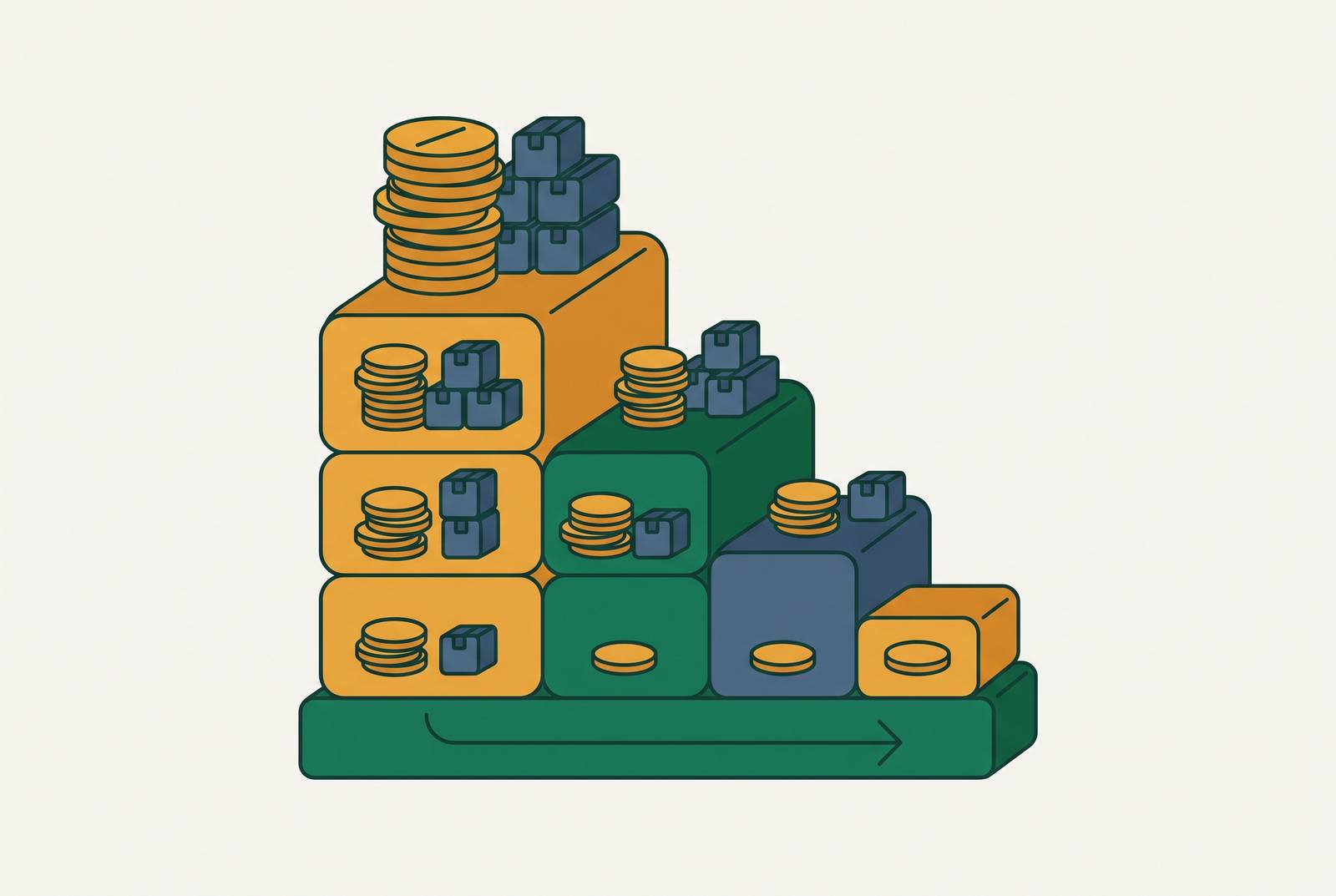
On June 1, 2026, GitHub retired premium requests into AI credits and raised model multipliers on the same day, though only for legacy annual plan subscribers; everyone else moved to token-based AI credit billing with no multipliers at all. The headline rate did not move. What a credit bought did. That single change is the clearest evidence available that a volume discount on credits is only as stable as the credit itself, and most vendors have not thought past the arithmetic to the unit underneath it. Credit-based pricing is no longer a niche structure that only a handful of AI startups experiment with. The PricingSaaS 500 Index found that the number of companies offering credit models grew 126% year-over-year, and a large share of the companies it surveyed already bill in AI credits or plan to introduce them within the next year. That kind of growth curve means the decisions made about credit discounting now will shape how an entire category prices itself for years. Vendors who treat a volume discount as "more credits, lower price" and nothing else are making decisions about margin, customer behavior, billing infrastructure, and revenue recognition without realizing it.
What a Credit Is Discounting
A credit does three jobs at once, and a discount on a credit is only worth as much as the engineering holding those three jobs together. It stands in for compute, it acts as a bundled balance of prepaid value, and it serves as the gate that determines which tier of model or feature a customer can reach. Each of those jobs imposes its own requirement before a tier structure can mean anything. As a compute proxy, the credit must map to a stable conversion table, whether that's tokens, GPU-minutes, API calls, or some combination, so that a discount on credits translates predictably into a discount on actual cost to serve the customer. If that table shifts without the buyer noticing, the discount becomes a number attached to nothing in particular. As a bundled value balance, the wallet holding those credits has to sit on the same billing engine as ordinary invoices and work the same way across every product surface a customer touches. Salesforce's Flex Credits sell at a published rate and can be spent across actions, prompts, translations, and voice interchangeably, and that kind of fungibility only works if the definition of a credit stays identical no matter which surface draws it down. As a premium access gate, a credit also decides which models or features a customer can reach, and changing what a credit unlocks is a price change even when the sticker price per credit never moves. None of the design choices that follow, tier thresholds, discount depth, expiry policy, mean anything until this definition is settled and made stable. A tier structure built on top of a wobbling unit is a tier structure built on sand, and no amount of discount math fixes that at the level of design.
Where AI Margins Sit
AI products run on gross margins around half of revenue, far below the seventy-to-eighty-plus percent margins that traditional SaaS businesses have run on, and that gap means the discount surface is narrower and more exposed to badly engineered tier structures. In the old SaaS model, the unit being sold, another seat, another login, cost next to nothing to produce once the software existed. A volume discount in that world cost the vendor nothing real to hand out and bought nothing real back in return; it was pure revenue arithmetic, restrained only by how disciplined the sales team chose to be. AI inference doesn't work that way. Every additional unit of usage carries a real cost of goods sold, one that moves with model choice, the mix of workloads running through it, and how much a given prompt actually asks of the system, none of which follow the neat rhythm of a billing cycle. No major inference provider publishes a rate card where the per-token price steps down as monthly volume goes up. OpenAI and Anthropic both offer named usage tiers, but climbing those tiers buys a customer more rate-limit headroom, not a cheaper token. The lesson for anyone designing a credit package sits right there in what the infrastructure layer refuses to do. If the companies closest to the raw cost of compute won't discount by volume alone, then a credit-package vendor sitting a layer above them, reselling that same compute with a thinner margin cushion, has even less room to get the discount wrong.
Volume discounts indexed to behavior, not buyer size
The instinct carried over from SaaS is to reward the biggest buyers with the deepest discounts, the same way an enterprise license agreement rewards headcount. That instinct doesn't hold up against AI's cost structure, because buying more credits does nothing on its own to make the next credit cheaper to produce. There is no economy of scale sitting at the account level waiting to be passed along, so no vendor anywhere publishes a volume step on a rate card indexed to account size the way an old seat license once was. What does lower the actual cost to serve a customer is behavior, and the discount a vendor can afford to share back is worth exactly as much as the engineering behind the credit's three functions. A buyer who prepays a large credit package hands the vendor a planning horizon and a clearer picture of how its compute fleet will be utilized, and that's why pre-committed AI consumption is discounted somewhere between 25% and 45% against on-demand rates across the industry, with AWS Bedrock's provisioned throughput, Azure AI Foundry's Provisioned Throughput reservations, and Google's own provisioned throughput ladder all built around the same logic: the discount is paying for capacity the vendor can plan around and actually use. A buyer who surrenders real-time scheduling control, agreeing to batch or asynchronous processing, lets the vendor fill troughs in its own fleet, and that trade runs at roughly half off list price at essentially every major provider; stack that against cache-read discounts, which exist because a cache read skips recomputation of the cached prefix tokens, and at OpenAI and Anthropic the two discounts stack to roughly ninety-five percent off list input. If a buyer commits not just to a volume of credits but to a predictable workload mix, the vendor can route requests to cheaper models and avoid expensive cold-path inference. The design conclusion that follows is specific: discount tiers should be earned through the size and term of a prepayment, not through the buyer's total contract value or headcount, because prepayment is the behavior that actually moves the needle on cost. Enterprise buyers will push back on this, since they're used to treating volume discounts as a negotiating convention tied to how big the deal is. You don't need to abandon the enterprise demand for predictable pricing; you can meet it through commitment rather than size. Snowflake does exactly that: it applies a small automatic AI Credit discount tied to annual contract value, but its standard capacity and prepay discounts don't carry over to AI Credits at all, because the discount there is built around commitment, not account size.
Setting tier thresholds to drive commitment without cliff edges
Once the discount is indexed to prepayment and term rather than account size, the next question is where to put the thresholds, and getting that wrong creates its own failure mode. A stepped tier structure, where a buyer pays one rate below a line and a meaningfully better rate just above it, creates a cliff edge, and any buyer sitting just under that line has a strong reason to either stuff extra usage in to cross it or feel penalized for falling short. Windsurf ran directly into this problem with the credit model it retired in March 2026: its flat credit rate charged the same price for a simple one-line request as it did for a complex, expensive one, and that mismatch pushed users to cram several requests into a single prompt just to get more value per credit spent. A smoother pricing surface avoids that failure mode: the per-unit price moves continuously with commitment size, so every additional credit purchased earns its own small discount, and the buyer never has to round up or down to the nearest discrete tier. You don't need a truly continuous pricing function to get the benefit; tightly spaced tiers, close enough together that no buyer sits far from their natural spending level, approximate the same effect well enough in practice. Getting that spacing right means looking at where real buyers actually commit, not at round numbers that look clean on a pricing page, so the tiers sit where the buyers already are rather than forcing them to stretch upward or settle for less than they need. The expiry window attached to a credit package is a margin lever in its own right and deserves the same deliberate treatment as the thresholds themselves. A longer expiry window makes a large prepayment feel safer to commit to, since the buyer isn't racing a clock, but it also stretches out how long the vendor carries those unused credits as a liability, and that tradeoff has to be modeled against the vendor's own margin position rather than copied from whatever the last vendor did.
Prepaid credit wallet mechanics
A tier structure only means something once it's wired into a billing system that can actually hold it, and prepaid credit wallets rarely exist in isolation from the rest of a vendor's invoicing. Most AI and enterprise products need prepaid wallets and postpaid invoices running side by side on the same engine, and any volume discount applied to the prepaid side has to be modeled against both consumption paths at once, not designed in a vacuum. Salesforce's Flex Credits, sold at $500 per hundred thousand units and usable interchangeably across actions, prompts, translations, and voice, show what that requires in practice: the wallet has to let a buyer draw down credits across any product surface without being forced to carve out spend in advance by feature. The discount attached to a prepaid package also has to account for the fact that the buyer is handing the vendor real working capital months before that money is earned through usage, and a discount that only reflects the commitment signal while ignoring the time value of that cash is mispriced from the start. None of that mechanical complexity matters to the customer if the one thing they actually need is missing: a clear, real-time view of how many credits are left. If buyers can't see their consumption as it happens, they run into bill shock, and bill shock produces churn and support tickets rather than renewal. Enterprise buyers in particular are already asking for this kind of predictability, and some CFOs burned by unpredictable consumption bills in the past are now pushing vendors toward flat-fee arrangements with shared risk instead of pure usage billing. A prepaid wallet sits on the vendor's balance sheet as a liability until the credits are actually spent, making the discount offered on that wallet not only a pricing decision but a revenue recognition one under ASC 606, a real constraint a finance team will enforce whether product teams plan for it or not.
How the discount structure shapes customer usage behavior
A discount structure doesn't just set a price. It sets the emotional register a customer carries into every single use of the product, and a customer who dreads using the product won't renew it. Windsurf's own account of retiring its flat credit rate in March 2026 makes the stakes plain: the structure, it said, "led users to be scared of asking quick questions," an admission that a poorly calibrated credit rate had turned ordinary product use into something customers hesitated to do. A customer who rations use of a product they're already paying for isn't getting value from it, and a customer not getting value from a product doesn't renew it, regardless of how generous the discount looked on the pricing page. The fix isn't only about the discount's depth, it's about how the transition into a new structure is handled for people already using the product. By May 6, 2026, monday.com rolled out a combined seats-plus-credits model where every new bundle came paired with a matching monthly discount, calibrated so that no existing customer saw their bill jump on day one of the switch. That's a discount doing a different job than rewarding volume: it's smoothing a transition so that trust in the pricing model survives the change. A volume discount built without attention to how it lands on the customer's day-to-day use of the product is a discount that may hit its revenue target in the first quarter and still fail the renewal test in the fourth. Getting the structure right means treating usage confidence as a design output just as real as margin or tier placement, because a credit a customer is afraid to spend was never really a discount.